

Technology That Speaks the Body’s Language.
That’s when movement becomes natural again.
Technology That Speaks the Body’s Language.
That’s when movement becomes natural again.
Biopods Technologies Change the Conversation That Our Feet Have With The Ground.
Ever wonder why foot problems persist and even affect your lower limbs, hips, and back?
For decades, the conventional belief has been that many foot problems are genetic — as if dysfunction were inevitable.
And yes, genetics play a role. But they are the starting point, not the end of the story.
The most common causes of foot-related problems aren't fixed traits — they're a reflection of muscle weakness and joint instability, shaped by what the body has (or hasn’t) been asked to do.
And the deeper culprit?
Might be right under our toes — our shoes.
We’ve been told that good footwear protects us — with more support, more cushioning, more control.
And it makes sense. When something hurts, we want to shield it. When we’re told we’re unstable, we reach for something to steady us.
Many of us have trusted that message – that our feet are inherently weak and unstable. And we’ve adapted to it.
What if the problem isn’t our feet — but the messages they’ve been receiving?
All movement begins with sensory information.
Before muscles engage, before joints align — the nervous system interprets what it feels.
Our bodies don’t act randomly.
They respond to what they are sensing — in every moment.
When that input is clear and meaningful, our bodies adapt with precision.
When it’s distorted — dulled by cushion, confused by control —
our bodies adapt to that, too.
Not because our bodies are failing. Because they're listening. Our bodies have been listening to the conventional "good" supportive footwear message that says: “You're not capable. Let us do it for you.”
Biopods technologies offer a different message.
Not one of correction. Not one of control.
Biopods introduce a subtle varied stimulus the body can recognize — and respond to.
That stimulus' message says:
“You’re capable.”
“You can adapt.”
“Let’s move together — with ease.”
With every step, that message is reinforced — not by force, but by feedback. And over time, our bodies reorganize — around clarity, not compensation.
Biopods Technologies Mimic the Natural Signals That Facilitate Healthy Movement.
When we move barefoot on varied, natural terrain, the sensory input to the soles of our feet is always changing — in pressure, location, and intensity.
This variation is essential.
It’s what keeps our nervous systems alert, engaged, and responsive.
It’s how our brains know to anticipate, prepare, and align — even before the feett touch the ground.
Biopods technologies recreate this variability through dynamic stimulus mechanisms — shifting intensity and location with every step.
That stimulus doesn’t instruct.
It invites engagement.
Our brains listen. Reflexes activate.
And our bodies arrive — ready, aligned, and responsive.
These reflexes are active in every step — helping our bodies to safely and efficiently manage stress, reduce injury risk, and move with ease.
Patented Technologies Designed to Reawaken Natural Healthy Movement.

Designed For Sensory Engagement.
1. Four-way stretch knit allows natural arch and toe movement.
2. Non-stretch heel ensures rearfoot stability.
3. Stimsoles® Insole Pods deliver gentle, varied stimulus to our arches.
4. Neuro-stimulus midsoles transmits terrain-based input to our soles.
5. Soft, durable EVA outsoles conform to terrain for improved traction.
6. Stimulus adjustor disks customize arch stimulus intensity.
The Difference Is in the Response
Biopods technologies stimulate our bodies’ innate reflex systems.
Conventional footwear suppresses them.
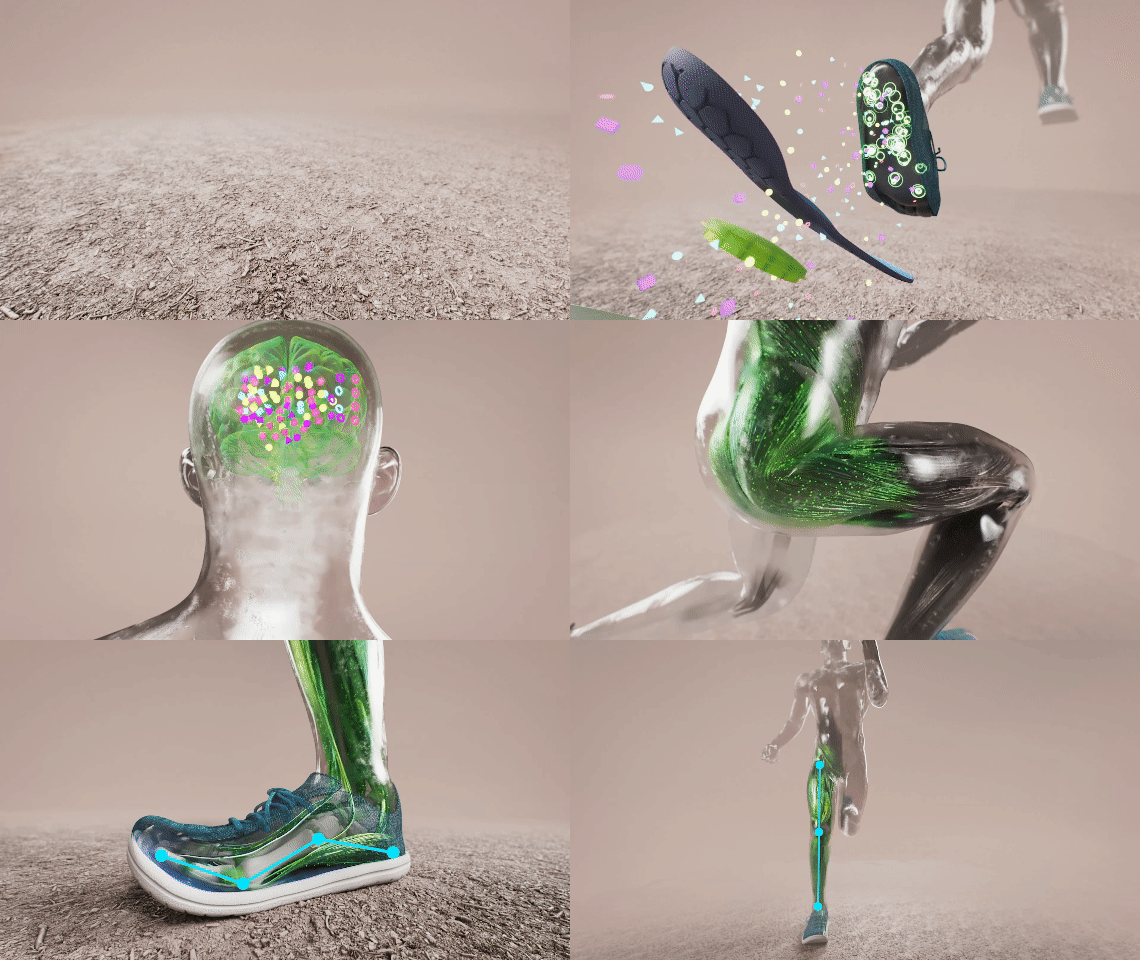
Biopods® Technologies
Reconnecting the Foot-Brain Loop
Biopods dynamically stimulate our soles with each step, sending varied, meaningful input our nervous systems can use.
✅ Stimulation = Preparation — Our brain anticipates variable input and responds with reflexive muscle engagement — before the feet even touch the ground.
✅ Stability from Within — With dynamic input, our feet and legs organize in real time, adapting to changing demands with ease — not resisting them.
✅ Efficiency with Ease — Each step becomes a strengthening rep — without force, without compensation.
Capability isn’t built through control. Healthy movement is remembered through use.

Conventional Products
Dulled Input. Diminished Response.
Supportive and cushioning shoes and orthotics mask sensory input, leaving our nervous systems with little to respond to.
❌ No Signal = No Preparation — Our brains don’t anticipate what isn't felt. Reflexes remain passive — our lower limbs functionally unstable.
❌ Instability on Repeat — Without dynamic input, our bodies attempt to compensate for the instability — both underworking and overworking.
❌ Long-Term Weakening — What doesn’t get used gets forgotten. And disuse becomes dysfunction = pain.
When input fades, adaptation leads to dysfunction. The memory of healthy movement is lost.
Movement Begins With What the Body Feels — at Every Phase of Gait
Footwear doesn’t just influence comfort. It shapes how our bodies prepare, respond, and stabilize — step by step.
Comparing Biopods & Conventional Footwear: The Ground Contact Experience.
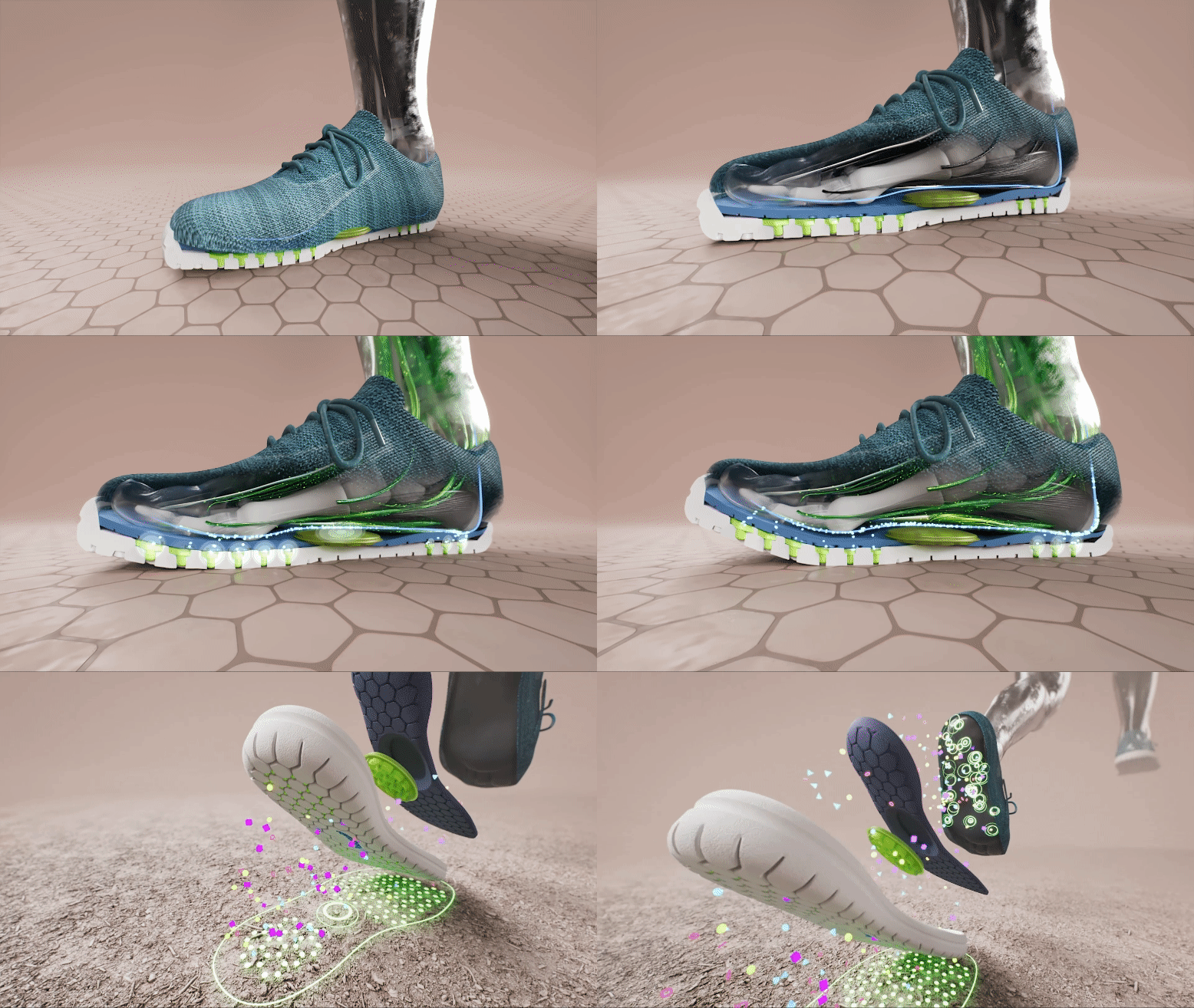
Biopods: Delivering Dynamic Ground-Contact Feedback
1. Adaptive Outsoles: Biopods’ soft, flexible EVA outsoles compress in response to localized changes in terrain and pressure as our bodies shift during movement — while harmonizing with our foot’s natural axis of rotation — centered within its own mass.
This functional adaptability, ensures a broad contact patch and optimal traction without increasing loading forces.
2. Targeted Neuro-Stimulus Activation: Within the outsole lies a torsionally flexible midsole featuring a honeycomb matrix embedded with small pins.
When localized pressure compresses the outsole, these pins become activated — creating gentle, varied upward pressure. These activation points mimic the natural feedback of walking barefoot on varied ground.
3. Varied Input, Engaged Response: These changes in pressure and contact location vary from step to step. Our feet receive a constantly shifting pattern of stimulus — in both intensity and position.
This variability is exactly what our nervous systems need for safe, efficient movement. It keeps our brains alert and engaged, enabling more responsive, aligned, and stable movement with every step.
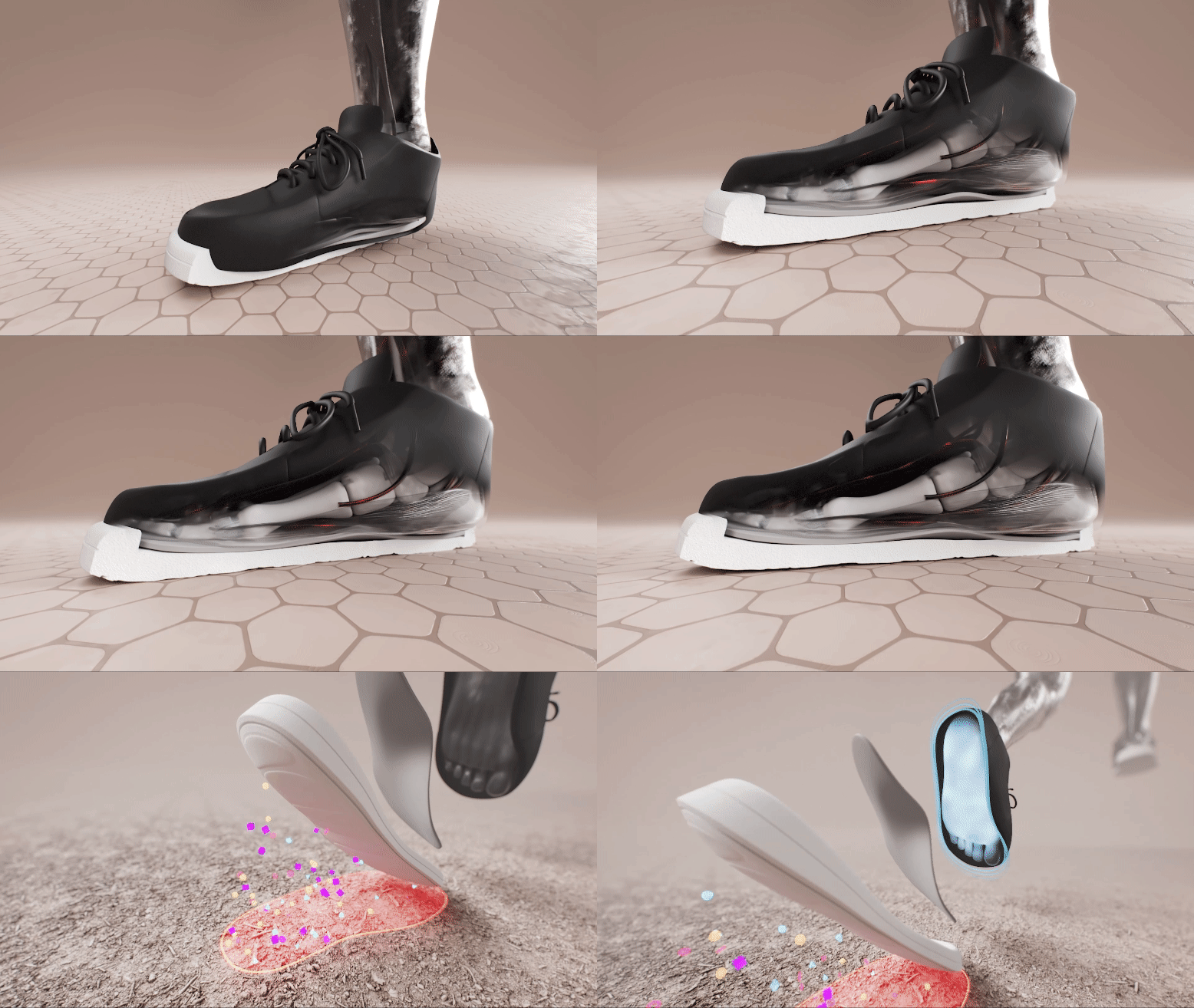
Conventional Footwear: Muting Our Foot's Natural Feedback
1. Rigid Layers and Dampened Contact: Most athletic and comfort footwear attempt to "control" our feet with features like a rigid stabilizing upper sole layer, a soft cushioning midsole layer, and a stiff outsole.
This layered structure disconnects our feet from terrain and shifts the axis of rotation away from their natural center.
The farther this external axis moves from the foot’s internal center, the more rotational force is generated at contact — increasing load and destabilizing alignment. Dress shoes are equally restrictive.
2. Diminished Ground Feedback: At the same time, these footwear characteristics dampen localized feedback — reducing the richness and variation of the sensory input that our nervous systems depend on to prepare and adapt.
3. Monotone Input, Reduced Engagement: The result: footwear that that delivers "weak" sensory information, less traction, more force to manage, and less efficiency in doing so.
What should be a responsive process becomes static control — our bodies' increasing passive reliance on external support and cushioning, which limits our nervous system’s ability to self-organize.
Biopods vs. Conventional Footwear: The Critical Pre-Ground Contact Muscle Activation Phase.
The Most Overlooked Phase in Movement — and Why It Matters
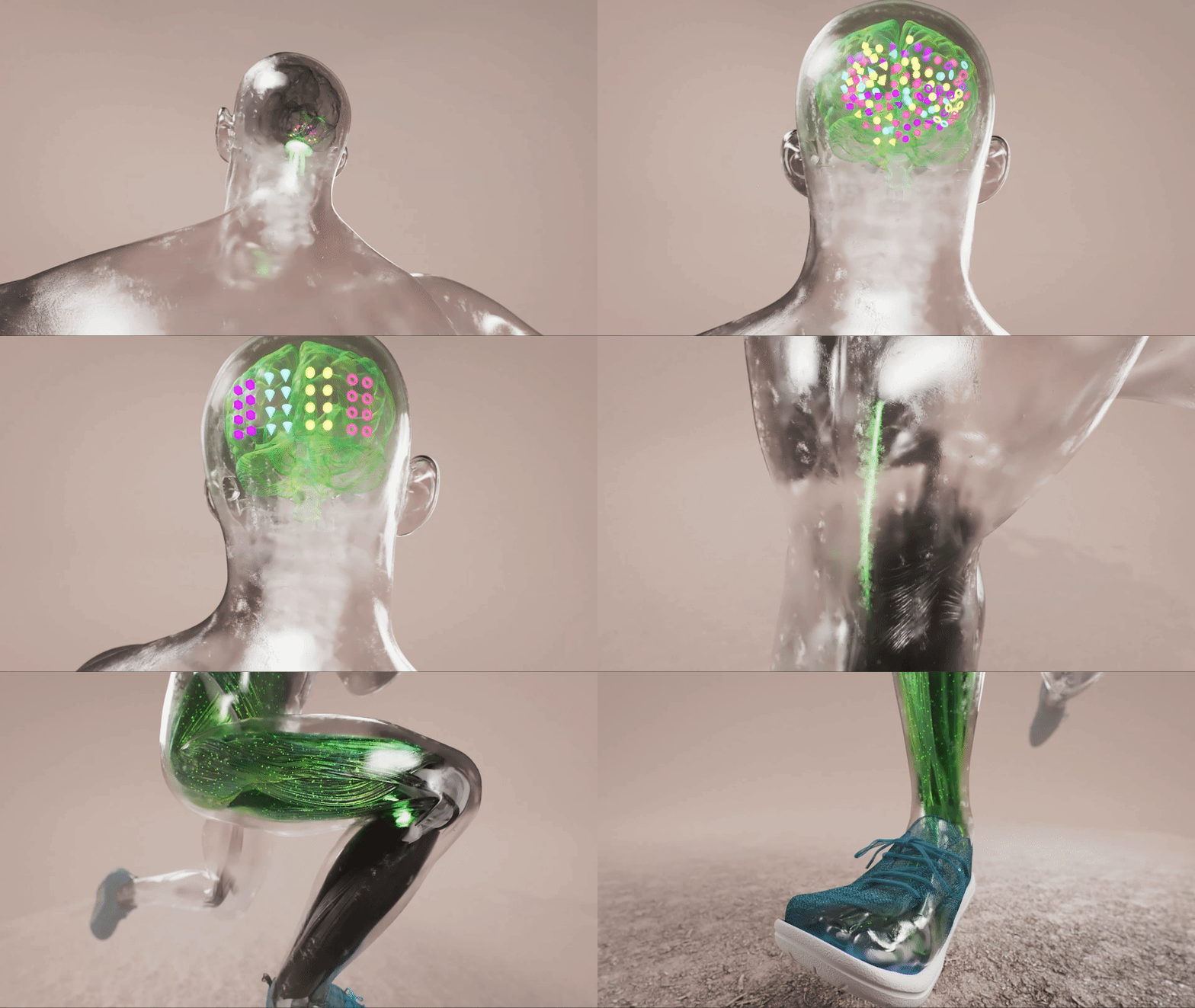
Biopods: Preparing Our Bodies Before Each Step
1. Stimulus Engages Anticipation: Biopods' varied, step-to-step stimulus keeps our brains alert — primed to anticipate changes in ground contact, weight shift, and terrain.
2. Reflexes Activate in Advance: This anticipation triggers protective reflexes that ready our lower limbs — not in reaction, but in preparation — before our feet meet the ground.
3. Freedom Of Movement: Biopods’ flexible soles and four-way stretch uppers move in harmony with our foot’s natural mechanics — allowing our feet to respond to what our brains are asking them to do.
4. Alignment Follows Engagement: As a result, our bodies enter each step already organized — with reflexive alignment, responsive muscle activation, and less force to manage — for safe, efficient movement.
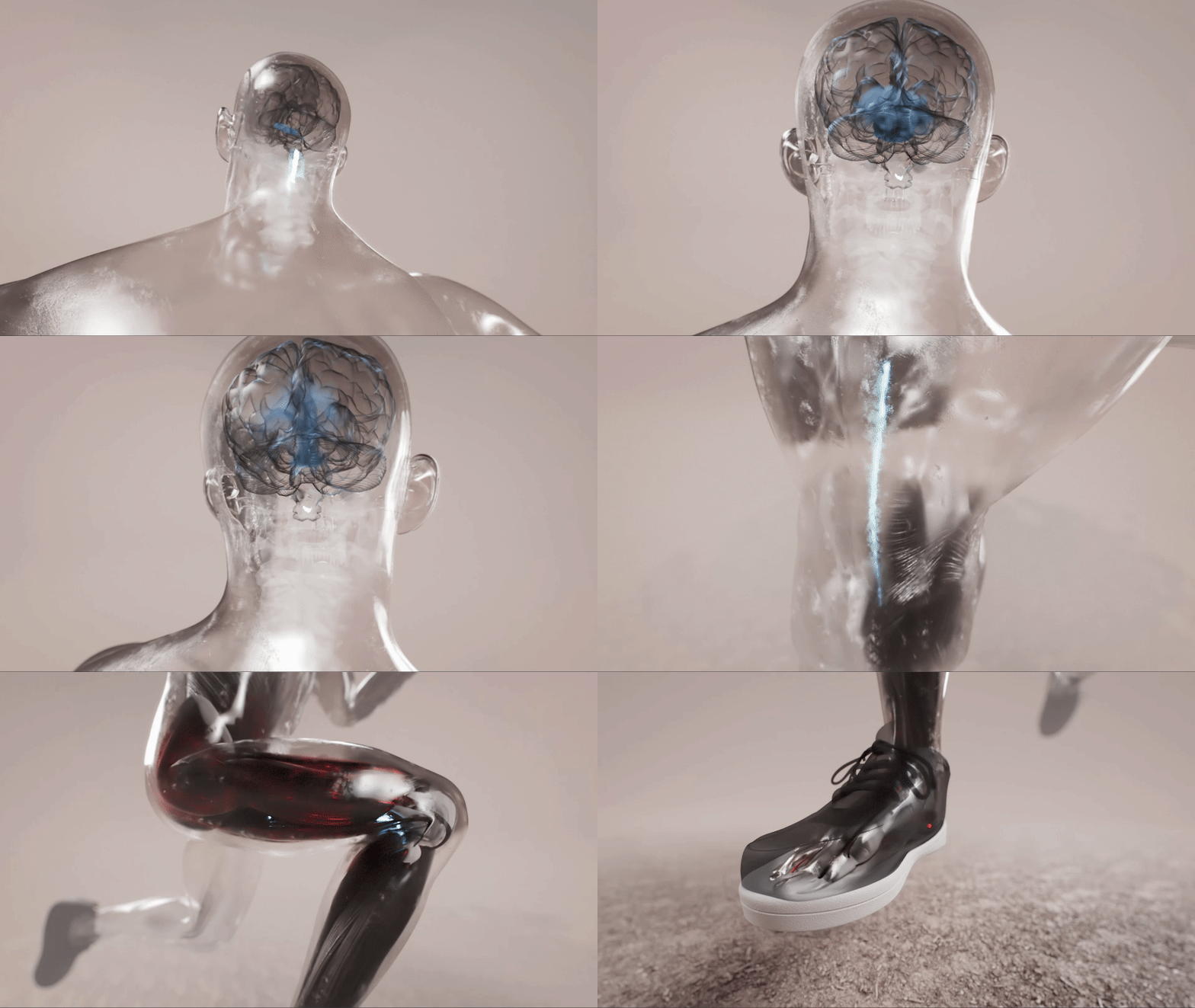
Conventional Footwear: Dull Input, Impeded Response
1. Diminished Sensory Input: The repetitive, low-variation signal from most conventional footwear offers little for our brains to interpret — every step feels the same, regardless of condition.
2. Reflexes Remain Passive: Without meaningful stimulus, our brains don’t anticipate change. The protective reflexes that would normally prepare our lower limbs stay inactive.
3. Inhibited Movement: Rigid soles, tight uppers, and stabilizing structures interfere with the foot’s ability to respond. Even if our brains send a signal, the footwear restricts how well the feet can follow through.
4. Misalignment at Contact: As a result, our bodies meet the ground unprepared — poorly aligned with inefficient muscle activity through our feet, knees, hips, and spine.
Biopods vs. Conventional Footwear: Stabilization & Propulsion Phases.
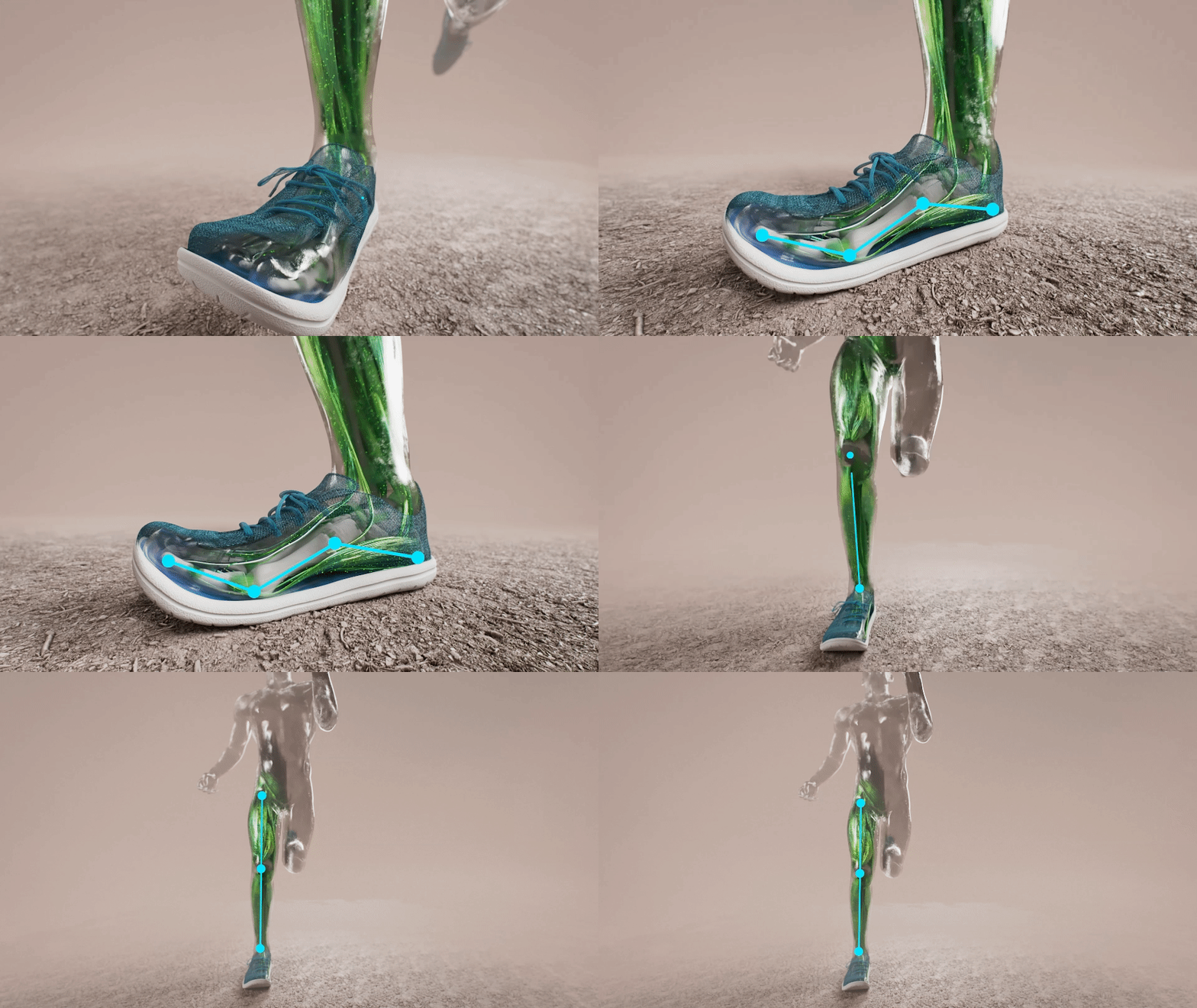
Biopods: Stabilization That Propels
How Reflexes Enhance Performance — Naturally
1. Reflexive Elevation: Biopods’ stimulus activates the Protective Reflexes, prompting our toes and arches to lift instinctively in response to activity intensity — preparing our feet for safe, stable propulsion.
2. Alignment That Holds: As our feet load and prepare to push off, reflex-driven adjustments maintain optimal joint positioning and muscle engagement through our entire lower limbs.
3. Power Without Compensation: With alignment dialed in, muscle efficiency increases. Our bodies generate more force with less strain — unlocking capacity, not just control.
4. Strain Resistance Built In: By organizing proactively around dynamic input, our bodies avoid overload patterns that cause wear and tear — even under high demand.
5. Health That Carries Forward: With every step reinforcing natural mechanics, Biopods not only reduce pain — they restore our functional foundation for long-term lower limb health.
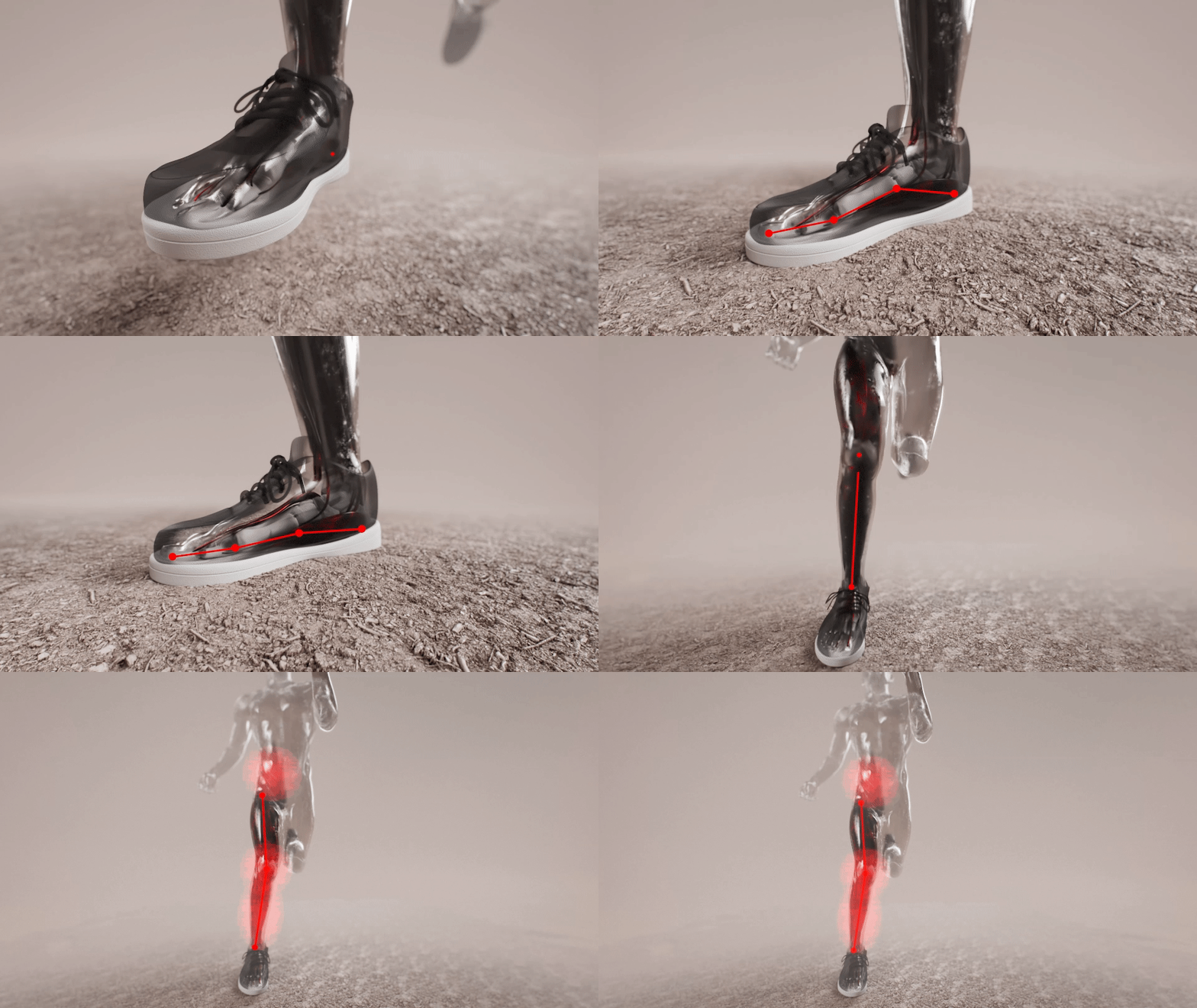
Conventional Footwear: Disrupted from the Ground Up
The Consequences of Diminished Sensory Input
1. Delayed Reaction: Without meaningful stimulus, protective reflexes aren’t triggered. Toes and arches don’t lift in preparation — they react late, if at all.
2. Instability Under Load: Lacking proactive muscular support, our feet become structurally unstable during loading and propulsion. Arches collapse, ankles are unstable, and joints absorb unnecessary stress.
3. Compensatory Mechanics: When our bodies can’t align reflexively, they recruit inefficient patterns — overworking some muscles, underutilizing others — amplifying strain.
4. Performance Loss by Design: Each step requires more effort to manage less force. Instead of efficient transfer, energy dissipates through poor coordination and misalignment.
5. Dysfunction That Echoes Upward: This instability doesn’t stay in the feet. It travels — disrupting knees, hips, and lower back mechanics. Pain becomes a pattern, not just a symptom.
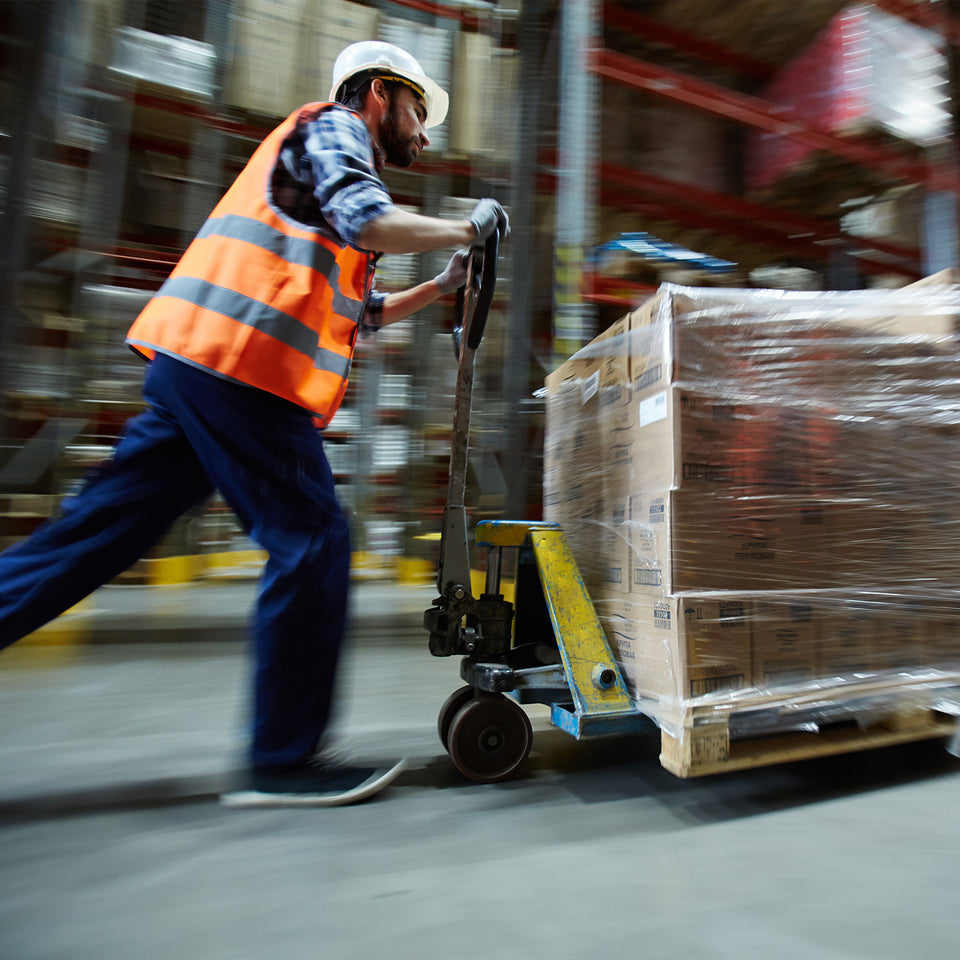
Technologies For All Walks Of Life




Reflections from our customers

Recommended by Healthcare Professionals
I’ve reviewed the science underlying Biopods and found the product reflects the fundamental laws of biomechanical physiology and applies that in an elegant accessible way.
"
I’ve been in practice for 10 years in Los Angeles. I have started to move away from prescribing orthotics because of my recent experience with Biopods products.
"
In my 35 years of practice, for even the most chronic patients, there is nothing that has made a more significant difference or stabilized my patients than Biopods.
"
Experience Biopods and Barefoot Science With Confidence
120 day
Money-Back Guarantee
99.5%
Customer Satisfaction
Sezzle
Pay in Instalments